Stock Market Today: Older Americans' Wealth and Spending
Fed data show median net worth for families aged 75 and up rose 37% from 2022 to 2025 while under-35 families fell 23%, a gap tied to resilient spending.
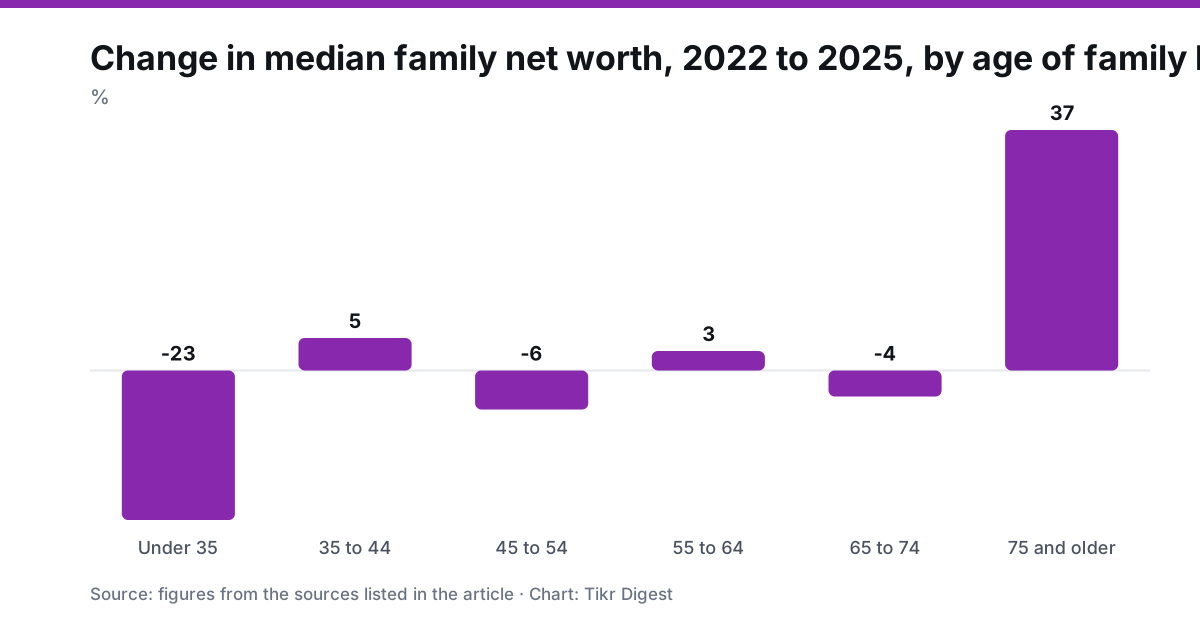
| Age of family head | Change in median net worth, 2022 to 2025 |
|---|---|
| Under 35 | -23% |
| 35 to 44 | +5% |
| 45 to 54 | -6% |
| 55 to 64 | +3% |
| 65 to 74 | -4% |
| 75 and older | +37% |
Consumer spending has held up despite pressure from housing costs, debt and everyday expenses, and a new set of data points to age rather than income as a driver. Federal Reserve figures from the Survey of Consumer Finances, released Friday, show that inflation-adjusted median net worth for families headed by someone 75 or older rose 37% between 2022 and 2025. For families under 35 it fell 23%. Median income rose 24% for the oldest group and 2% for the youngest. The figures compare group medians across survey years rather than tracking the same families.
Economist Ed Yardeni of Yardeni Research calls the pattern a “G-shaped economy,” a generational twist on the “K-shaped” debate over whether high earners are masking strain among everyone else. “There is an affordability crisis. It’s for younger people,” he said. He argues older Americans have accumulated investments, retirement savings and home equity that support more spending, on themselves and on children and grandchildren.
A Principal Financial Group survey of 1,000 consumers, fielded from April 17 to May 16 with a margin of error of plus or minus 3.1 percentage points, found 53% of baby boomers said they could manage their debt, versus 42% of Gen X and millennials and 39% of Gen Z. Boomers also reported the highest satisfaction with their finances at 41%.
The investing angle is in the withdrawals. A JPMorganChase Institute report that examined more than 20 million de-identified Chase checking accounts found 8.2% of individuals moved money from investments into checking in the three months through April 2026, up from 4% in the same period of 2019. Net transfers from investments to checking equaled 6.8% of spending in April 2026, compared with 3.5% in April 2019. Among people 65 and older in the top 10% of earners, 37.3% made net withdrawals from investment accounts in 2025, up from 24.5% in 2019.
The report lists normal retirement withdrawals, the shift from pensions to defined-contribution plans and a possible wealth effect from stock market gains as likely factors. Experts quoted by CNBC caution that not every boomer is secure and not every younger American is struggling.
Prepared with AI assistance from public sources and reviewed under our editorial policy. Not investment advice.